What Is a Town Hall Meeting? Purpose, How to Run One, and Example Questions
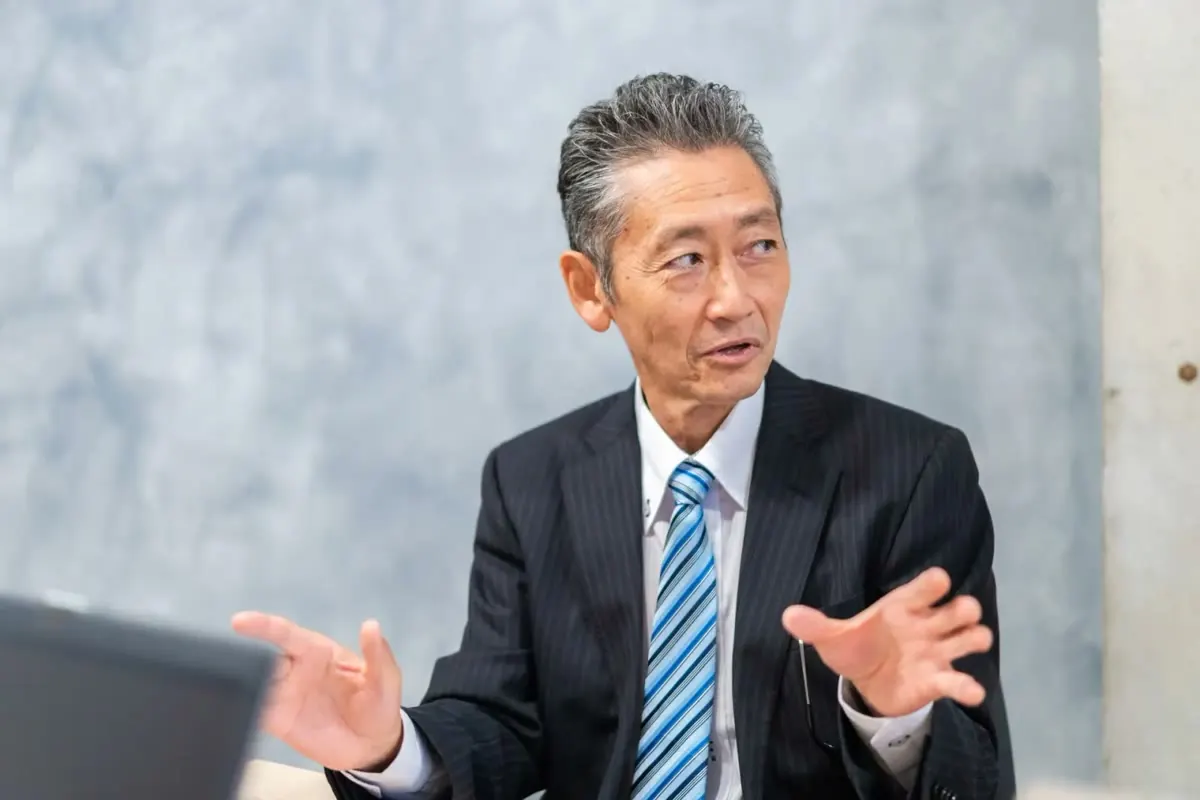
Your CEO wants to “hear directly from employees” and has asked you to run a town hall meeting. Now you're worried no one will ask anything on the day.
A town hall is a meeting where leadership answers employees' questions directly, so whether it works depends almost entirely on how you collect the questions.
This article covers what a town hall is for, how to run one, and example questions employees ask leadership.
What Is a Town Hall Meeting? Meaning and Origin

A town hall meeting is a meeting where the CEO or other executives talk about the company's direction and then answer employees' questions directly. The point is less about listening to leadership and more about giving employees a chance to ask things they normally can't. Many town halls spend more than half the time on Q&A.
The name comes from the community meetings held in towns across the United States. Residents gathered in the town hall to discuss the town's budget and rules. In politics, the term is still used for meetings where elected officials or candidates answer questions from the public.
A company town hall brings that format into the workplace: people in very different positions talking directly, in the same room. Microsoft Teams even has a meeting type called “Town hall” for large audiences. Some companies give the meeting a friendlier name, such as “Ask the CEO” or “leadership Q&A.”
The audience is the CEO and executives plus either all employees or the staff of one department or office. Some CEOs travel from office to office, holding town halls with a few dozen people each. Other companies gather several hundred people at headquarters and connect everyone else online.
It also helps to know how a town hall differs from similar meetings. An all-hands meeting is a regular meeting where everyone hears the month's numbers and updates from each department, so it's mostly reporting. An annual company meeting, where you rent a venue once a year to celebrate the year's results, is more of a company event. A town hall is different because most of the time goes to the back-and-forth: employees ask, and leadership answers. Many companies hold one every quarter or every six months, each with a set theme.
Town Hall Meeting Purpose: Benefits and Drawbacks

The main purpose of a town hall meeting is to help employees understand and accept the company's direction. Imagine learning about a department merger from a company-wide email. You'd go back to work worried, not knowing how your job or your manager will change. If you can ask about that worry on the spot and hear the reasons and what comes next directly from the CEO, the merger feels less like something announced at you and more like something you understand and can accept.
For leadership, it's a chance to hear directly about problems on the front line that never show up in reports. What reaches executives through managers tends to get its rough edges smoothed off. And when employees watch a CEO they rarely see answer questions one by one, leadership starts to feel a little more approachable. Buy-in for the company's direction, honest input from the front line, and less distance between employees and leadership: these are the three things a town hall is expected to deliver.
That said, holding one doesn't guarantee success. Here are the upsides and the difficulties side by side.
Benefits
- Employees can ask leadership questions directly
- Fewer misunderstandings and rumors about the company's direction
- Front-line problems reach leadership
- Employees see the CEO's personality and the reasons behind decisions
Drawbacks
- Takes work to prepare and run
- Questions tend to come from the loudest voices
- Becomes a formality if nothing changes after the answers
- Some questions are hard to answer on the spot
Two of these drawbacks, skewed questions and the meeting becoming a formality, shrink a lot depending on how you collect questions and what you do after answering them. The preparation also gets much lighter from the second meeting on, once you've set the routine the first time.
When a town hall meeting works best
Town halls are most effective when the company is going through big changes: after a reorganization or merger, when the business changes direction, or when people keep leaving and the reasons never make it up from the front line. At times like these, employees have plenty they want to ask. If your CEO said “I want to hear from employees” during one of these periods, it's exactly the right time to hold one.
How to Run a Town Hall Meeting: Agenda and Preparation

If you start preparing a month ahead, you'll have plenty of time. Here's what the HR or internal communications person in charge needs to do, in order.
- One month before: choose a theme with the CEOTalk with the CEO and narrow it down to the one topic they want to discuss with employees this time. A new mid-term plan, an organizational change, a new work policy: with a clear theme, employees find it easier to think of questions.
- Two weeks before: send the invitation and collect questions in advanceAlong with the date, time and how to join, share a place where employees can send questions anonymously. Write “Any question is welcome,” and include a few example questions.
- By the day before: agree with leadership on how to answerGive the collected questions to the executives, and decide how to handle anything they can't answer on the spot.
- On the day: a moderator runs the meeting, with most of the time for Q&AKeep leadership's message short and spend more than half the time on Q&A. Take questions that come in on the day, too.
- One to two weeks after: answer the questions you didn't get toPublish answers to the questions you ran out of time for, for everyone to see, on the intranet or by email.
- Also: run a surveyAsk “Did you get to ask what you wanted?” and “What topic should we cover next time?” and use the answers to plan the next one.
You can collect questions in advance with an anonymous form. But with a form, employees can't see what others have asked, and you can't tell how many people share the same concern, so leadership won't know which questions to answer first. On the day, try a Q&A tool where every question is visible to everyone as it comes in and people can like the ones they want answered. Then you can answer in order of what the room cares about most.
For a 60-minute meeting, this time split protects the Q&A:
| Segment | Time and speaker |
|---|---|
| Opening and how the meeting works | 5 min · Moderator |
| Leadership message (thoughts on the theme) | 15 min · CEO |
| Q&A (advance questions and questions from the day) | 35 min · CEO and executives |
| Wrap-up and commitments before the next meeting | 5 min · CEO |
Have someone from HR or communications moderate, not an executive. That way the moderator reads out questions on the employees' side. If the CEO picks the questions, it looks like they're only choosing the easy ones. In the room, executives sitting on chairs at the same level as employees, rather than standing at a podium, makes it feel more like a conversation.
Don't skip the last five minutes, the commitments before the next meeting. Ask the CEO to say in a sentence what they'll look into or change based on today's questions. That alone tells employees this isn't a talk-and-forget meeting. If you hold town halls about once a quarter, that's just the right gap to report at the start of the next one on how far those commitments have come.
Town Hall Meeting Questions: Examples Employees Ask Leadership

When you don't know what employees will ask, both the executives and the moderator tend to get nervous. Common questions fall into four groups: strategy and direction, performance reviews and ways of working, front-line problems, and leadership's views and personality. If you show example questions like these in the invitation, employees see that they really can ask about these things, and they find it easier to write their own.
Questions about strategy and direction tie straight into the theme, so you'll probably get the most of these. Beyond the numbers, people mostly want to know what will happen to their own work.
- Which part of the business will you focus on most next year, and why?
- What will change about our department's work under the new mid-term plan?
- Competitors keep cutting prices. How do we plan to compete?
Questions about reviews and ways of working are hard to ask your own manager, so you tend to get more of them when people can ask anonymously.
- Review criteria seem to differ from department to department. Are there plans to make them consistent?
- Do you plan to keep the remote work policy next year and beyond?
- What is the company doing to make younger employees want to become managers?
Questions about front-line problems bring leadership the things that never make it into reports.
- When do you plan to add staff to the departments that are short-handed?
- All the approval paperwork cuts into the time we spend with customers. Are there plans to reduce it?
- Each office uses a different system, which creates extra work. Is there a plan to standardize?
Questions about leadership's views and personality lighten the mood when you put them at the start or end of the meeting.
- What was the hardest job you had early in your career?
- Which recent business decision did you go back and forth on the most?
- How do you spend your days off?
When you meet with the executives beforehand, ask them to give the conclusion first. For anything they can't answer right away, ask them to add a deadline: “We'll look into it and get back to you by the end of next month.” If answer after answer starts with a long preamble and ends with “We'll consider it,” employees will feel there was no point in asking.
A first question the moderator can use
If the Q&A looks likely to stall at the start, prepare one question the moderator can ask on employees' behalf. The natural choice is the advance question the most employees were concerned about. If you don't have one, a question like this works:
Based on what you've shared today, if you could name one thing we as employees should change starting next month, what would it be?
For phrases to open and close a Q&A, see our Q&A moderator script and example phrases.
Handling difficult questions
For questions about individuals, such as a specific person's role change or pay, ask leadership to say they won't answer in front of everyone and that HR will follow up one-on-one. You'll also get questions about rumors, such as an acquisition or an office closing. Ask leadership in advance not to answer anything undecided as if it were decided. Saying honestly what you can't share does less damage to trust than dodging the question.
That hasn't been decided yet, so I can't answer it today. As soon as it is, you'll hear it directly from us first.
Why Town Hall Meetings Feel Pointless, and How to Fix Them
You held a town hall, and employees are calling it pointless. Meetings that get that reaction usually make one of three mistakes.
| Common mistake | What happens on the day | Fix |
|---|---|---|
| Leadership talks too long, one way | The CEO talks for 40 minutes, leaving just 10 for Q&A | Give more than half the time to Q&A |
| Only safe questions come up | No one asks what they really think in front of the people who evaluate them | Collect questions anonymously and answer the most-liked first |
| Answers lead nowhere | “We'll consider it,” and then nothing more is heard | Keep publishing the answers and what's being done |
The first mistake is a one-way meeting: leadership talks so long that there's almost no time left for employees' questions. You can prevent it by setting aside more than half the time for Q&A. The second is common when people have to raise a hand and speak into a microphone. With the people who evaluate them sitting right there, employees almost never ask what they really think. You get questions about the cafeteria menu, and the CEO concludes, “Our employees just don't ask questions.” The third: if answers never lead anywhere, employees stop asking at the next meeting.
Collect honest questions anonymously, and answer the most-liked first
If you want honest questions, accept them in a way that not even HR, who runs the meeting, can tell who wrote them. Once employees know their names won't show, hard topics like performance reviews and understaffing start coming in. Then sort the questions by likes, and you can answer what many employees want to know, rather than one loud person's question. That also takes care of the skewed questions listed under the drawbacks.
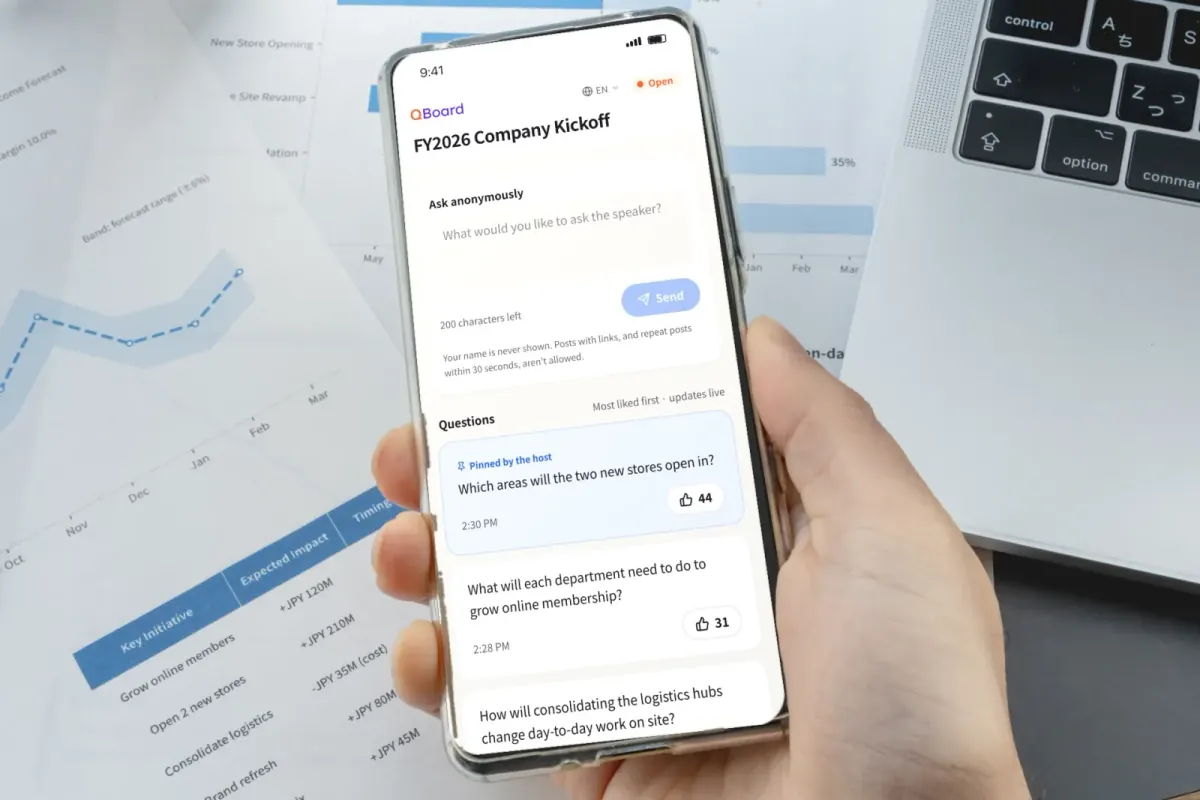
Still, just saying “It's anonymous” isn't enough. Employees will suspect someone can see who wrote what. QBoard, for example, never collects names, so not even the organizer can see who asked. That lets the moderator say plainly at the start, “Even those of us running this meeting can't see who asked what.” Employees ask from their phone's browser through a QR code or link, so there's no app to roll out. The screens are available in 16 languages, including English, Chinese, Korean and Japanese, and follow each person's device language. Questions can be written in any language, so in a workplace with many international employees, you'll also hear from people who hesitate to ask in the company's main language.
The organizer can pin or hide questions, but if you use hiding to bury difficult questions, employees will notice right away. Only hide posts that name individuals or have nothing to do with the theme. Posts containing URLs and repeat posts within 30 seconds are blocked automatically.
QBoard costs $19 per event. Each event takes up to 1,000 participants and runs for 4 hours from when you press Start. For a quarterly town hall, you pay each time you hold one, with no monthly subscription. Even a company-wide session with several hundred people at headquarters and online fits in a single event.
Keep publishing what happens after you answer
To keep answers from leading nowhere, keep publishing what you answered and what happened next. QBoard keeps the question list viewable after the event, so post those questions on the intranet with the answers given. Then keep the list updated in three groups: “In progress,” “Done,” and “Not this time (with the reason).” If you give a reason for the questions you're not acting on, employees won't feel ignored. At the start of the next town hall, report even one thing on the list that has changed, and you should see more questions each time.
How to Hold a Virtual Town Hall Meeting in Microsoft Teams or Online

Companies with offices in many locations or lots of remote employees often hold town halls online. If your company uses Microsoft Teams, you can set it up as a town hall, Teams' meeting type for large audiences, and take questions with the Q&A feature. According to Microsoft's official help, Q&A can be set to allow anonymous posts, and other attendees can upvote questions. You can sort questions by the most upvotes, and organizers can review questions and publish only the ones they approve.
What to watch when you take anonymous questions in Teams Q&A
One thing to watch: even when a question is anonymous, replies and reactions to it are not. Microsoft's help actually recommends turning off reactions to protect anonymity. Also, attendees who join view-only after the event reaches capacity can't see Q&A. After the town hall, organizers and co-organizers can download the list of questions as a file. Use it to prepare your follow-up answers.
Source: Microsoft Support, “Q&A in Microsoft Teams” (checked November 24, 2026)
For a hybrid town hall with people in the room and online
If some employees gather at headquarters and others join online from other offices, the meeting runs more smoothly when all questions come in through one channel. When the room uses raised hands and online attendees use chat, the moderator has to decide which to read first, and online questions tend to get pushed back. Place the streaming camera and lighting so the CEO's face is clearly visible. Just seeing a face makes it feel like a conversation, even through a screen.
Some companies also have part-time staff, or employees in factories or stores, who don't have Teams accounts. In that case, a Q&A tool that opens in a browser from a QR code or link lets you gather questions from the room and online in a single list. For the steps to turn on Q&A in Teams, see our guide to using Q&A in Microsoft Teams.
Summary: Start Your Town Hall Prep with How You Collect Questions

A town hall meeting is a meeting where leadership shares the company's direction and answers employees' questions directly. Start your preparation by deciding how you'll collect questions so employees can ask what they really think. Collect them anonymously, answer the most-liked first, and keep publishing what happens next, and no one will call your town hall pointless.
Don't worry if you don't get many questions the first time. Once something actually changes because of a question you answered, employees will see that asking gets results.
Put about three of the example questions from this article in your invitation. Send those three in QBoard, which you can try free as many times as you like with up to 30 participants for 60 minutes, and watch with your CEO as likes re-sort them. It's a good starting point for agreeing how leadership will answer on the day.
Share a QR code or link, and employees ask anonymously from their own phones. Names are never collected, so not even the organizer sees who asked.
Try it freeFree trial: up to 30 participants for 60 minutes, as many times as you like. Participants need no app and no sign-up